Last updated November 22, 2026
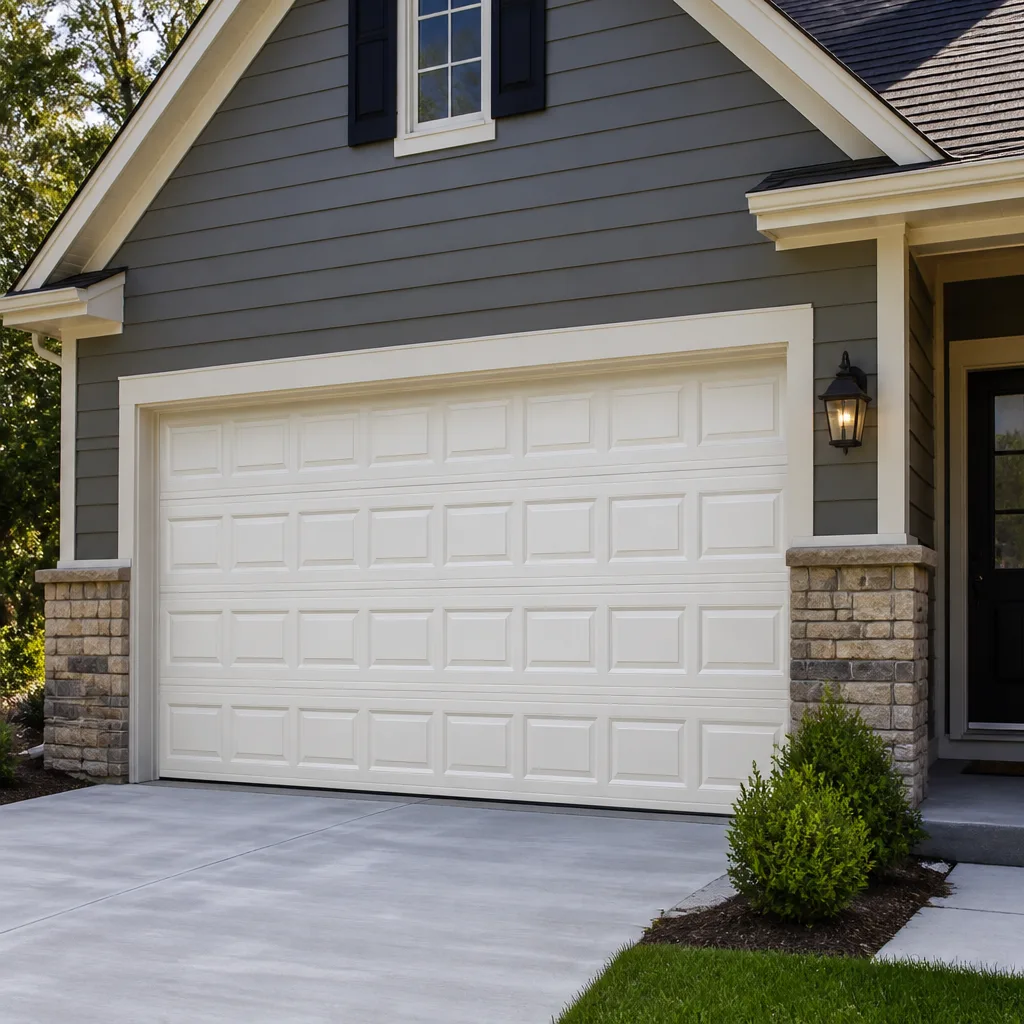 Raised-panel steel
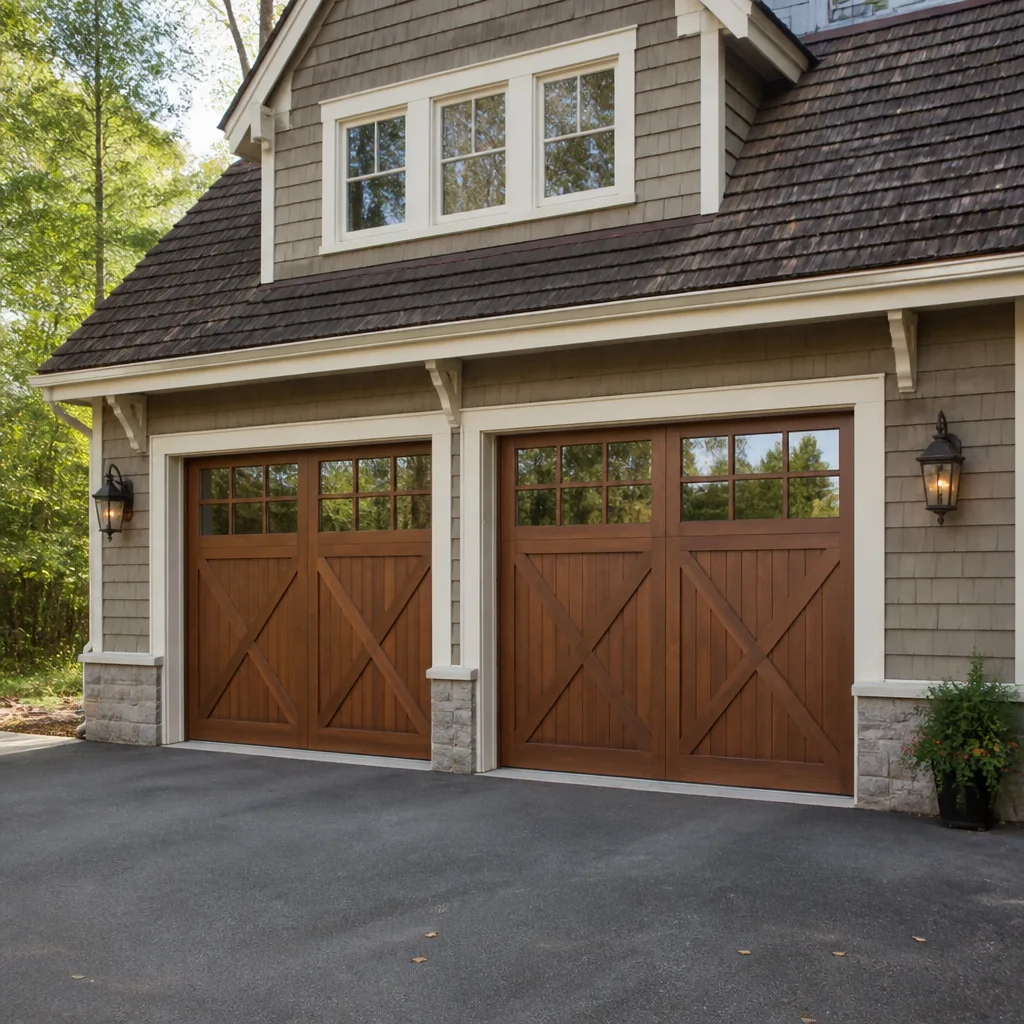 Carriage house
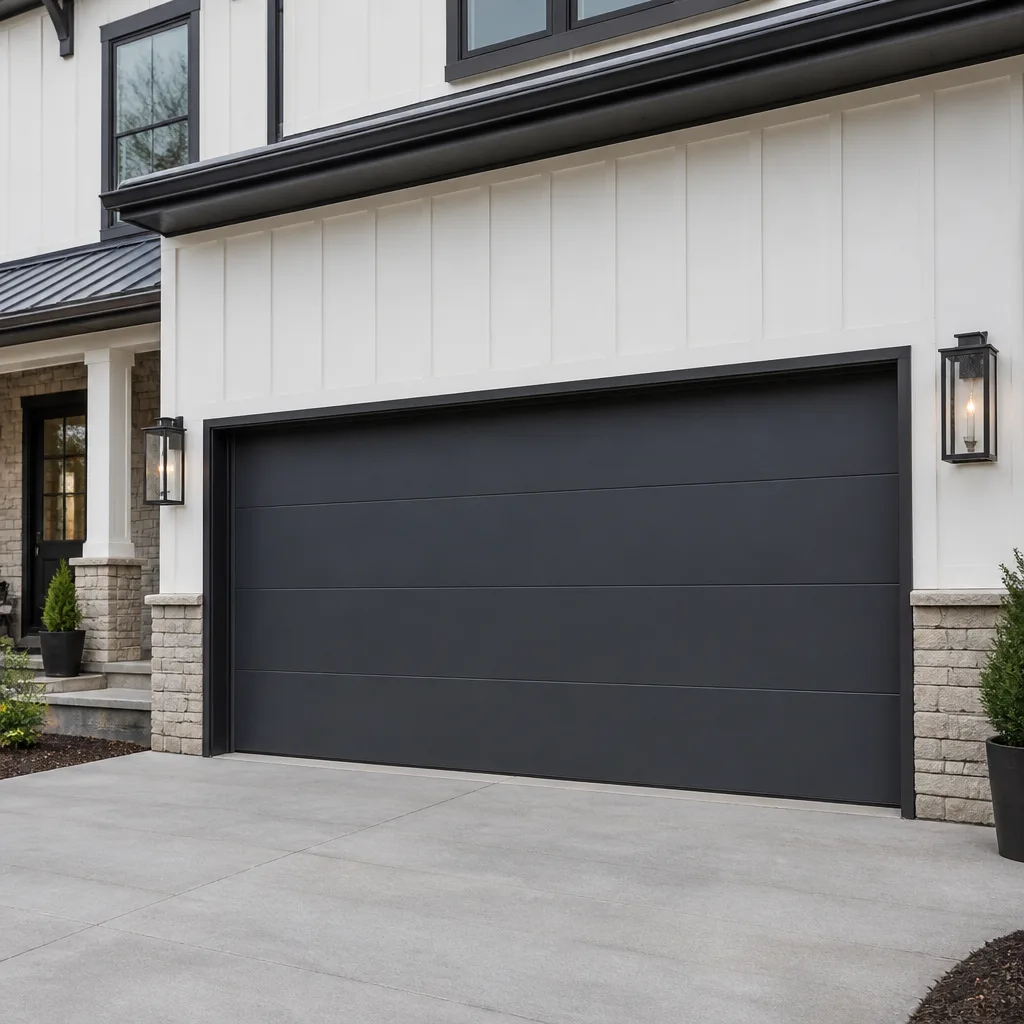 Modern flush
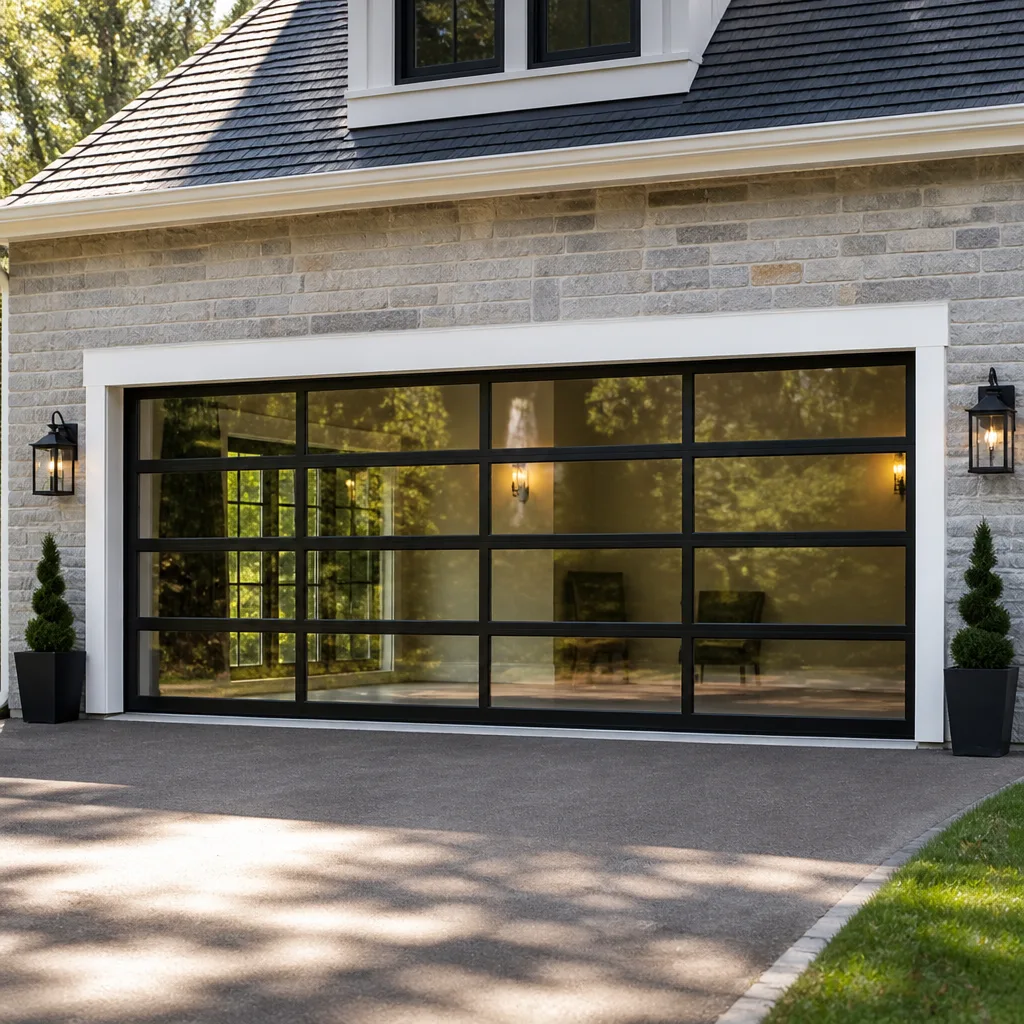 Full-view glass
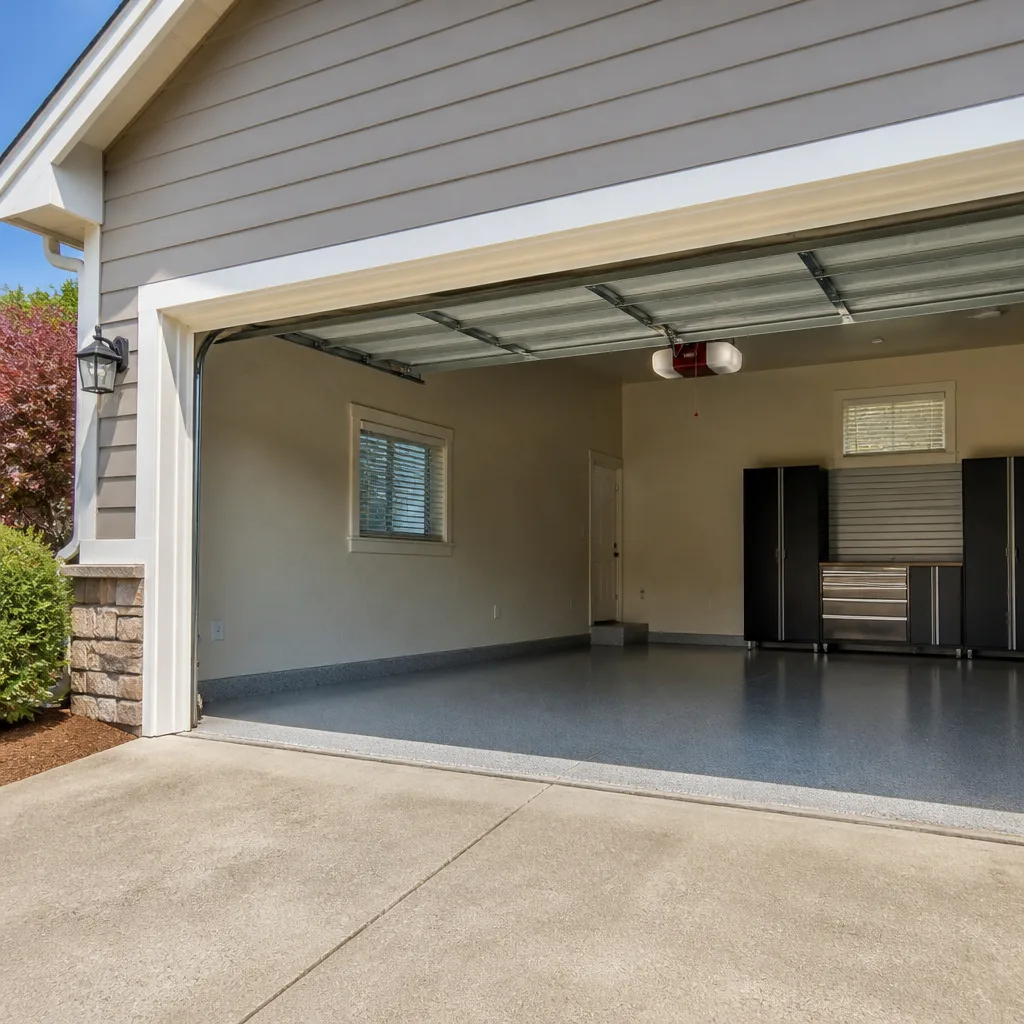 LiftMaster openers
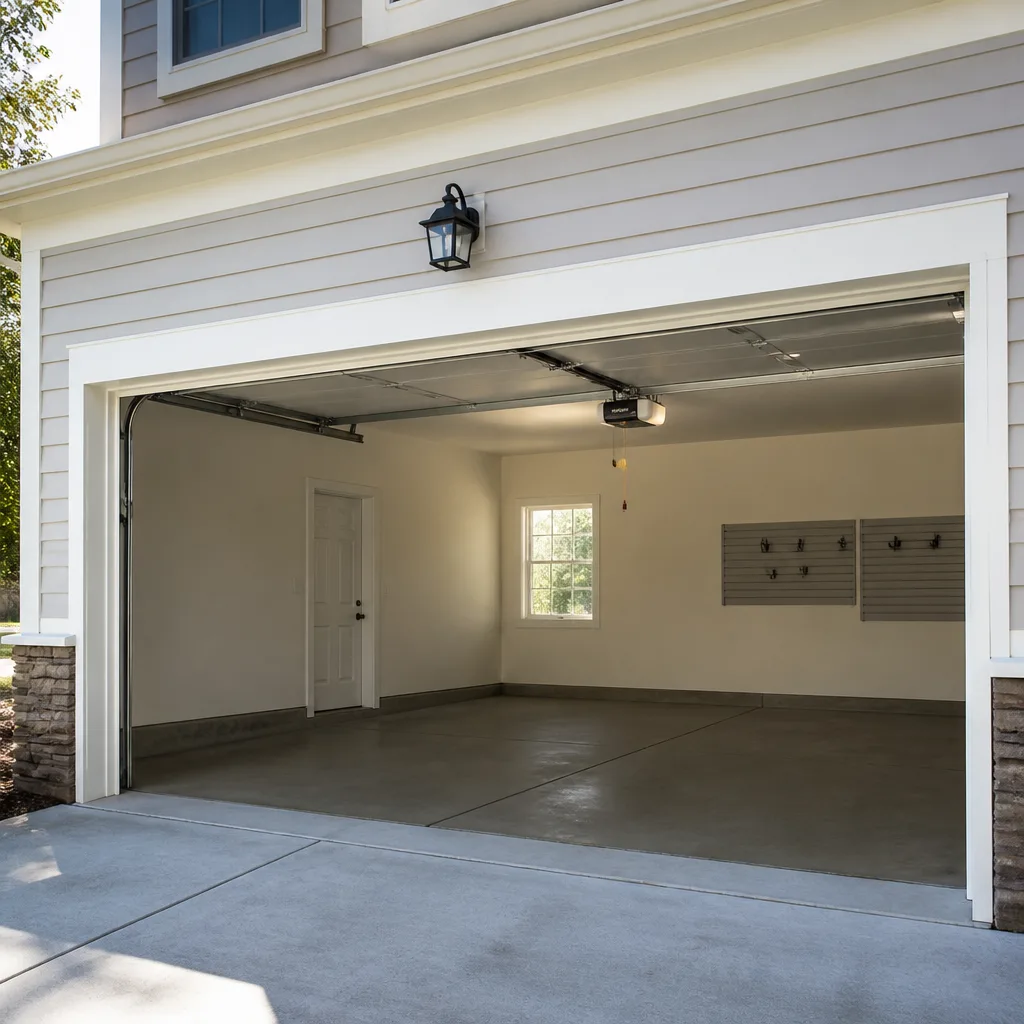 Chamberlain openers
Full 25-point door and opener safety check with every visit - springs, cables, rollers, tracks, and your LiftMaster or Chamberlain opener included
You get a price before we start. It does not change when the pro arrives.
Get your free estimateThe Complete Guide to Garage Doors in Hagerstown
Most garage door guides are written for a homeowner in Phoenix. Hagerstown doesn’t work that way. Some winters this valley gets 30-plus inches of snow, plenty of houses went up in the 1960s with rough openings that don’t match a modern stock size, and the summer humidity is hard enough to warp a wood door well before its warranty runs out. Those three facts change almost every decision a homeowner here has to make, from spring selection to opener drive type. In this guide we’ll walk through materials, springs, openers, insulation, and permitting, and show how each one maps to what actually holds up in Washington County. If you’re tired of advice written for a different climate, this is the page you’ve been looking for.
Quick Answer
A garage door in Hagerstown should be a steel or insulated steel door rated for freeze-thaw cycling, paired with a belt-drive opener on torsion springs sized for a cold-weather garage. Older Washington County homes often need a custom-fit or field-adjustment because original rough openings don’t match stock sizes. Replacement usually needs a permit through the city or county building department, while pure repair work generally doesn’t. The written estimate from a specialist, not a generic price list, is what sets your final cost.
Styles & brands we work with
- Raised-panel steel
- Carriage house
- Modern flush
- Full-view glass
- LiftMaster openers
- Chamberlain openers
Table of Contents
- Why Hagerstown’s Freeze-Thaw Cycle Is Harder on Doors Than a Consistently Cold Climate
- Matching Door Material to Hagerstown’s Weather Pattern
- Rough Opening Quirks in Older Washington County Homes
- Which Opener Drive Type Performs Best in an Unheated Hagerstown Garage
- Springs: The Part That Fails First and Why It’s a Specialist Job
- Insulation and Energy: What Actually Pays Back Here
- Local Permit Triggers: When Replacement Needs a Washington County Inspection
- A Seasonal Maintenance Rhythm for Hagerstown Homeowners
Why Hagerstown’s Freeze-Thaw Cycle Is Harder on Doors Than a Consistently Cold Climate
Hagerstown sits where winters swing hard in both directions. One week the ground is frozen and there’s snow piled against the door; the next it’s thawing and water is running across the apron. That freeze-thaw rhythm is genuinely harder on a garage door than steady cold would be, because every thaw cycle forces water into gaps that a hard freeze then widens. The parts that suffer first are the ones you’d guess and a few you wouldn’t.
- Bottom seals and weatherstripping. Rubber and vinyl seals crack faster when they’re repeatedly soaked, frozen, and dried. A seal that’s fine in a mild winter can lock to the concrete in a hard freeze, then tear the first time the door lifts.
- Torsion springs. Steel behaves differently in cold, and the number of cycles a spring endures doesn’t reset because it got cold. A spring that’s near the end of its life in fall is often the one that snaps on the first hard freeze.
- Cables and bearings. Moisture that gets in and refreezes adds friction in places that should spin freely. Grinding and popping sounds on a cold morning are usually lubrication failures, not a sign the door is dying.
- The door itself. Wood panels absorb moisture during thaws and dry unevenly, which warps them. Steel doors are more forgiving but can still show rust where the factory coating has chipped near the bottom edge.
What this means practically: in Hagerstown, weatherstripping and bottom seals are consumables, not permanent parts. Expect to inspect them every fall, and if you’re replacing a door anyway, choose one with a bottom seal you can change without pulling panels. If your door has stopped moving after a cold snap, that’s the moment to call for garage door repair rather than force it. Forcing a frozen door is how a cheap seal replacement turns into a bent panel and a broken spring.
Matching Door Material to Hagerstown’s Weather Pattern
Door material is where climate advice matters most, and where generic internet guides fail this area worst. Hagerstown’s combination of wet winters, humid summers, and large temperature swings favors steel and discourages plain wood. Here’s how the main options actually behave here.
Steel (the default for good reason)
Steel is the most common choice for Hagerstown and the one we recommend most often. It doesn’t absorb moisture, so freeze-thaw cycling doesn’t warp it. Look at gauge: 24- or 25-gauge steel is lighter and fine for a door that isn’t insulated, while 26- to 27-gauge steel tends to be thicker and holds up better to dents and flex. Insulated steel panels add a foam or polyurethane core, which matters here because they resist the panel flexing that uninsulated doors show in wind and temperature swings.
Wood and wood composite
Wood looks great and costs more to maintain in this climate than most homeowners expect. Any wood door in Hagerstown needs a fresh finish roughly every two to three years to keep moisture out, and skipping it is how a warranty claim gets denied. Composite and engineered wood products handle humidity better than solid wood, but they still need inspection. If curb appeal is the priority and you’re willing to keep up with the finish, wood works. If you want a door you can essentially ignore, it doesn’t.
Aluminum and aluminum-and-glass
Aluminum is light and rust-resistant, which suits the humidity. The catch is that lightweight aluminum doors flex more and, in an unheated garage, the glass panels fog and hold condensation through the winter. They’re a reasonable pick for a modern look on an attached, insulated garage. They’re a poor pick for a drafty detached garage that sees deep cold.
Brand and section choices that matter
Brands a homeowner can actually get serviced and re-paneled here include Clopay and Amarr, both of which build across the steel and wood-look range. Amarr in particular offers insulated steel options in common sizes that fit many Hagerstown homes. Wayne Dalton steel doors are also common on older installs around town. If you’re comparing door styles, ask whoever quotes you whether individual sections can be replaced. On a wood or composite door in this climate, section replaceability can save you a full tear-out down the road.
Rough Opening Quirks in Older Washington County Homes
Here’s a problem that almost no guide mentions. Many Washington County homes built in the 1960s and earlier were framed before anyone standardized garage door sizes. What that means in practice is that a “standard” 16-by-7-foot replacement doesn’t always drop into an older rough opening cleanly. A framing gap here, an out-of-square header there, and suddenly the stock-size door you picked in a showroom doesn’t fit the hole in your wall.
The rough opening is the framed hole the door closes into, measured as width and height between the finished framing. When it doesn’t match a stock size, you have three realistic paths:
- Custom sizing. Many manufacturers build to non-standard dimensions. It costs more and takes longer to order, but it avoids touching the structure.
- Field adjustment. A specialist can sometimes rework the framing, header, or threshold to bring an opening to a stock size. This is common when the difference is small.
- New construction standards. If the existing opening is badly out of square, correcting it properly is the only option that gives you a door that seals and runs true.
What this means when you’re shopping: never order a door over the phone using only the labeled size. Someone has to measure the actual rough opening, check it’s square, and note the headroom above the opening. Measure twice, order once. A door that shows up a half-inch too wide is a very expensive delivery. This is why a free measure-and-quote happens before anything is ordered, even on a straightforward-looking replacement.
If you’re looking at the door and it’s already installed, and the opening is the original one from the 1960s, assume custom sizing is possible until a specialist measures it. It usually changes the timeline, not whether it can be done.
Which Opener Drive Type Performs Best in an Unheated Hagerstown Garage
The opener question is where a lot of Hagerstown homeowners get steered wrong, because the advice online assumes a heated attached garage. Many garages here are detached, unheated, and see temperatures below freezing for weeks. That changes the calculus on drive type and lubricant.
Belt vs. chain vs. screw in this climate
- Belt-drive. The quietest option and the one we generally recommend for attached garages in Hagerstown, especially where a bedroom sits above. Belts handle cold reasonably well but need to be tensioned correctly; a slack belt in a cold garage is noisy and jerks.
- Chain-drive. The toughest of the three, and the most reliable through a freezing winter because there’s no flexible belt to stiffen. It’s louder, so it’s the better pick for a detached garage where noise doesn’t carry into the house.
- Screw-drive. Fewer moving parts and smooth, but it’s the least forgiving when the door is out of balance, and a misaligned door makes a screw-drive opener strain. It’s a good fit for a well-adjusted, insulated door.
Smart openers and modern controllers
Most homes now pair whatever drive they have with a smart controller, and the brands you can realistically get serviced here include LiftMaster and Chamberlain. Those two cover most of the smart openers installed in this area. Genie openers are also common, especially older units. Whatever you have, grip and belt tension matter more than the brand on the casing. An opener that “won’t close all the way” is usually a sensor or a safety-reverse issue, not a dead motor, which is exactly the kind of thing garage door opener repair resolves without a full replacement.
One more note specific to unheated garages: cold-thickened grease is a common cause of sluggish openers in January. A drive that worked fine in October and now struggles to lift is often fighting its own old lubricant, not failing. Having the opener serviced and re-lubed for cold weather is cheaper than replacing it.
Springs: The Part That Fails First and Why It’s a Specialist Job
Torsion springs do the heavy lifting on a garage door, and in Hagerstown they’re also the part that breaks first, because every freeze forces the spring to work harder against cold-stiffened tracks and seals. When a spring snaps, the door often won’t budge, or it flies up and won’t stay down. There’s no gentle failure here. That’s why our garage door spring repair is a named, dedicated service, and why many handymen and general contractors won’t touch these calls.
Here’s the safety part, said plainly: a wound torsion spring holds enormous stored energy, and the winding bars and tension that hold it are genuinely dangerous to handle without training and the right tools. This is not a DIY repair, and we won’t pretend otherwise. A trained technician knows the cycle life of the spring, can match the size to the door’s weight, and can do the replacement without putting you in the way of a high-tension component.
What a typical spring visit involves:
- Assess the door and both springs. Springs are often replaced as a matched pair, because a single new spring against an old one usually fails early.
- Verify the door’s balance. A door that’s too heavy for its springs will chew through the new ones, so the balance and roller alignment get checked before anything is wound.
- Replace and wind the spring safely. This is the part that requires the winding bars and the skill to use them.
- Test the door and the safety reverse. A final check confirms the door runs cleanly and the opener’s safety features still work.
If you’re hearing a loud bang from the garage and the door won’t open, don’t force it. That’s a spring, and forcing it risks the door coming down hard. Book a specialist instead. Spring replacement can often be handled same day, and the price is quoted before any work starts.
Insulation and Energy: What Actually Pays Back Here
Insulation is oversold and undersold at the same time. The honest answer for most Hagerstown homes: an insulated door helps if the garage is attached, shares a wall with living space, or has a room above it. It matters much less if the garage is detached and unheated, where you’re mostly buying durability and a stiffer panel rather than real energy savings.
Where insulation does help here is temperature stability. In a climate that swings between a frozen January and a muggy July, an insulated steel door moves less. Panels flex less, weatherstripping lasts longer, and the garage doesn’t heat up like an oven in summer. That’s the practical case for insulation in Hagerstown, more than any electricity bill.
If you’re choosing a door, ask what’s in the panels rather than accepting “insulated” as a finished answer. Foam or polyurethane cores resist flex better than a thin polystyrene layer. And be skeptical of any door marketed mainly on an R-value number. For an attached garage in Washington County, panel stiffness and a good bottom seal usually do more for everyday comfort than a higher R-value.
Local Permit Triggers: When Replacement Needs a Washington County Inspection
The short version: replacing an entire garage door or making structural changes usually requires a permit and a final inspection through the City of Hagerstown or the county building department, while a repair that doesn’t change the structure or opening generally doesn’t. Because rules change and can depend on exactly what the work touches, the right first step is always to ask your city’s building department whether your specific job needs a permit. This matters because an unpermitted structural replacement can create a headache when you sell.
Typical triggers that push a job toward needing a permit:
- Replacing the full door with one of a different size or changing the opening.
- Changes to the header, framing, or structural opening.
- Adding a new garage door where there wasn’t one.
- Altering the wall width or height the door occupies.
Typical work that generally doesn’t need a permit:
- Replacing broken springs, cables, rollers, or hinges.
- Replacing a worn bottom seal or weatherstripping.
- Servicing or replacing an opener on an existing door.
Don’t rely on a contractor’s say-so alone here. If a job touches the structure, ask the building department yourself so you know where you stand, and ask any installer quoting you how they’ll handle the inspection. A reputable specialist for a full replacement job will factor permit timing into the project schedule, because the door isn’t “done” until the inspection is signed off.
A Seasonal Maintenance Rhythm for Hagerstown Homeowners
Given the freeze-thaw winter and humid summer, two maintenance passes a year cover almost everything here. Do these in the fall before the first hard freeze and in the spring after the thaw. If you skip both, expect to meet us on an emergency call.
- Fall: inspect and free up the door. Check the bottom seal for cracks or a trapped seal against the concrete, clear snow and grit from the tracks, and lubricate rollers, hinges, and bearings with a cold-rated lubricant. Confirm the door runs smoothly before the freeze sets in.
- Fall: check the spring and the opener. A spring that’s near the end of its cycle is going to go first in cold weather. Have it assessed before it decides for you. Test the opener’s safety reverse and check the opener’s grip on the door.
- Spring: re-lubricate everything. The thaw leaves moisture in tracks and bearings. Re-lube and check for rust at the bottom panel and edge.
- Spring: check seals and alignment. Look for a warped panel or a seal that pulled away during freeze cycles, and check that the weatherstripping still sits tight.
Two maintenance visits a year is about the minimum for this climate. A door that’s ignored through a Hagerstown winter usually tells you with a grinding noise, then a broken spring, then a difficult call.
Common Mistakes to Avoid
- Ordering a door by its labeled size only. Always measure the actual rough opening first. In older Washington County homes, a “standard” size often isn’t the size you have, and a door that doesn’t fit is an expensive correction.
- DIY-ing the Springs. Torsion springs store enormous energy. Winding one yourself is the single most dangerous garage door mistake, and a mis-sized spring can fail and drop the door. Leave this to a trained specialist.
- Ignoring the bottom seal through winter. A torn or frozen seal lets water in and drives the freeze-thaw damage that warps panels. Change it when it cracks, not when the door starts dragging.
- Putting a cheap chain-drive opener on a heavy door in a cold detached garage. The motor strains, the door gets out of balance, and the opener quits by February. Match the opener to the door’s weight and the garage’s heat.
- Assuming every quote covers the same work. One price might be for one spring, another for a matched pair. Ask, and confirm the price is agreed before work starts.
- Skipping the permit on a structural replacement. See the permits section. Ask your city’s building department before the work starts, not after.
- Ignoring a wood door’s finish. Here, a wood door that loses its finish soaks up moisture and warps. Re-finish every two to three years or accept the repair bill.
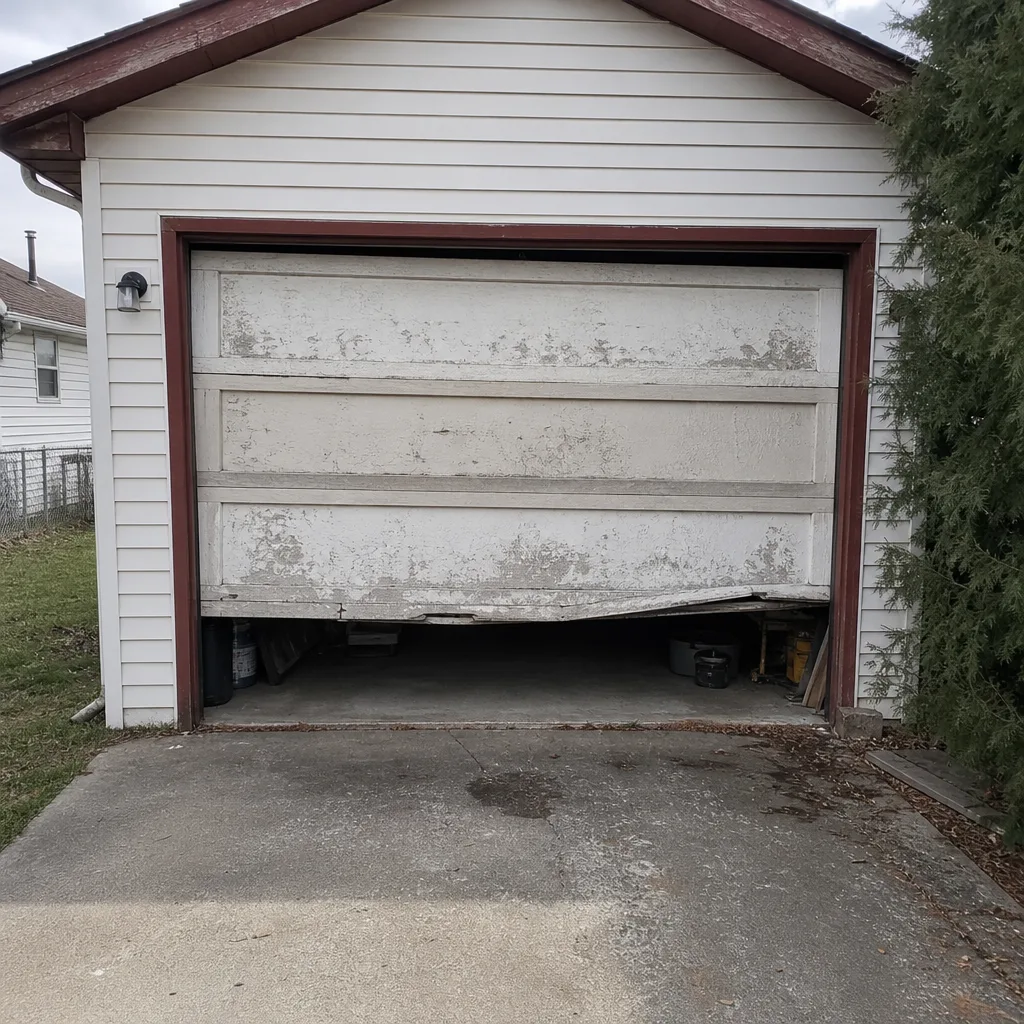
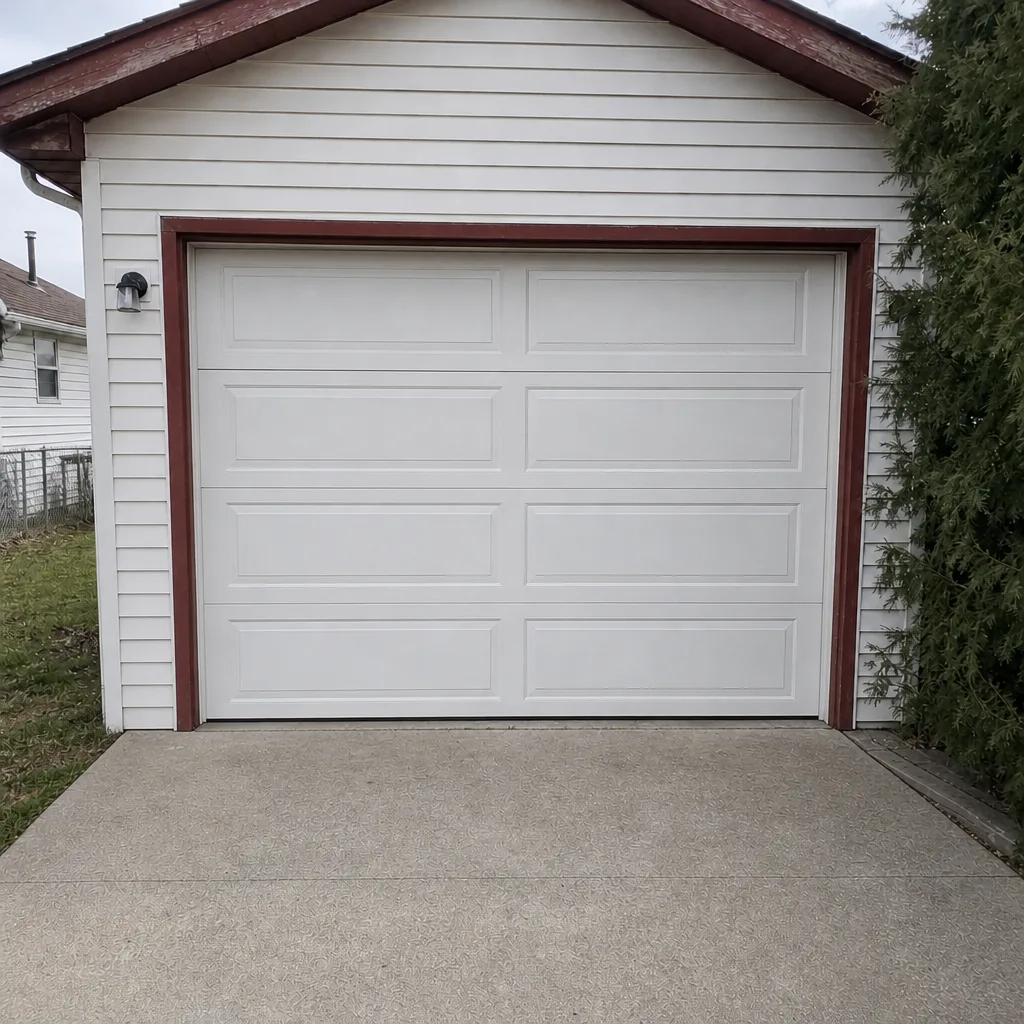
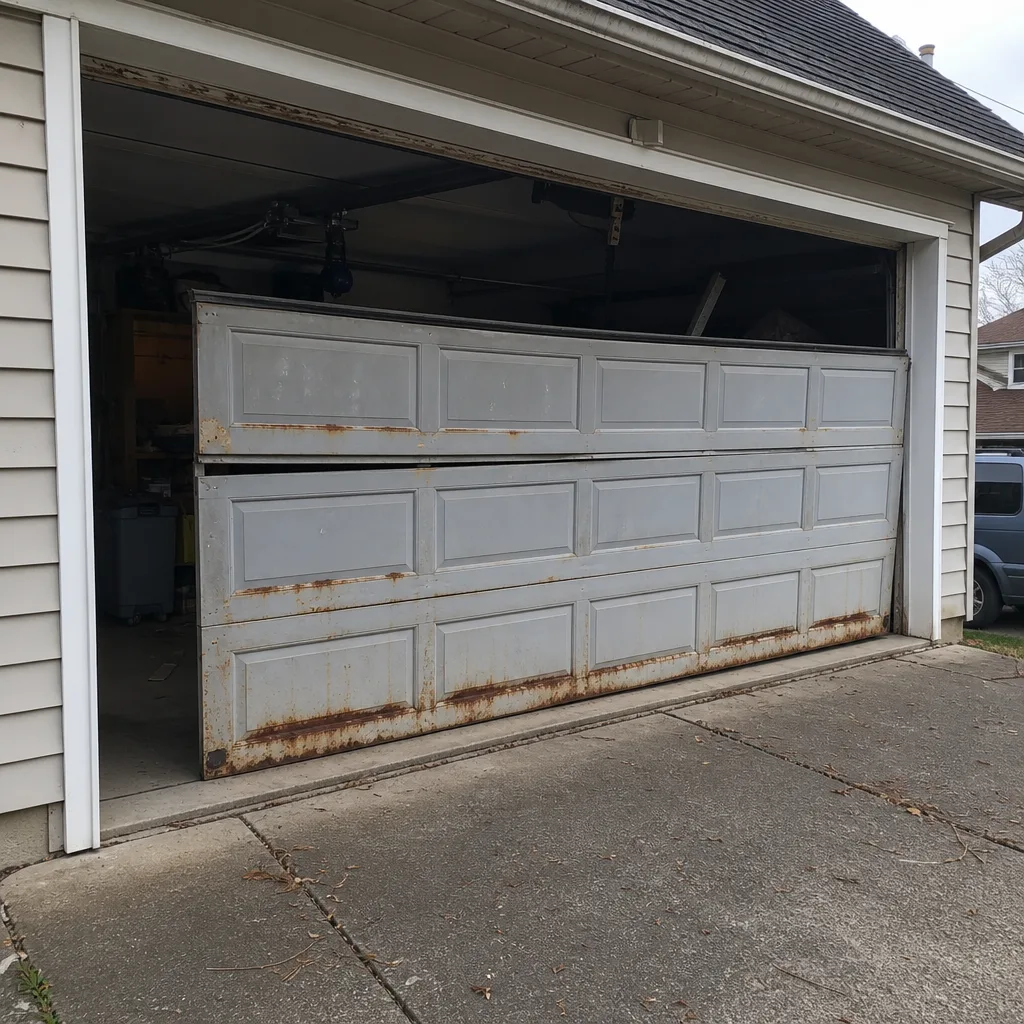
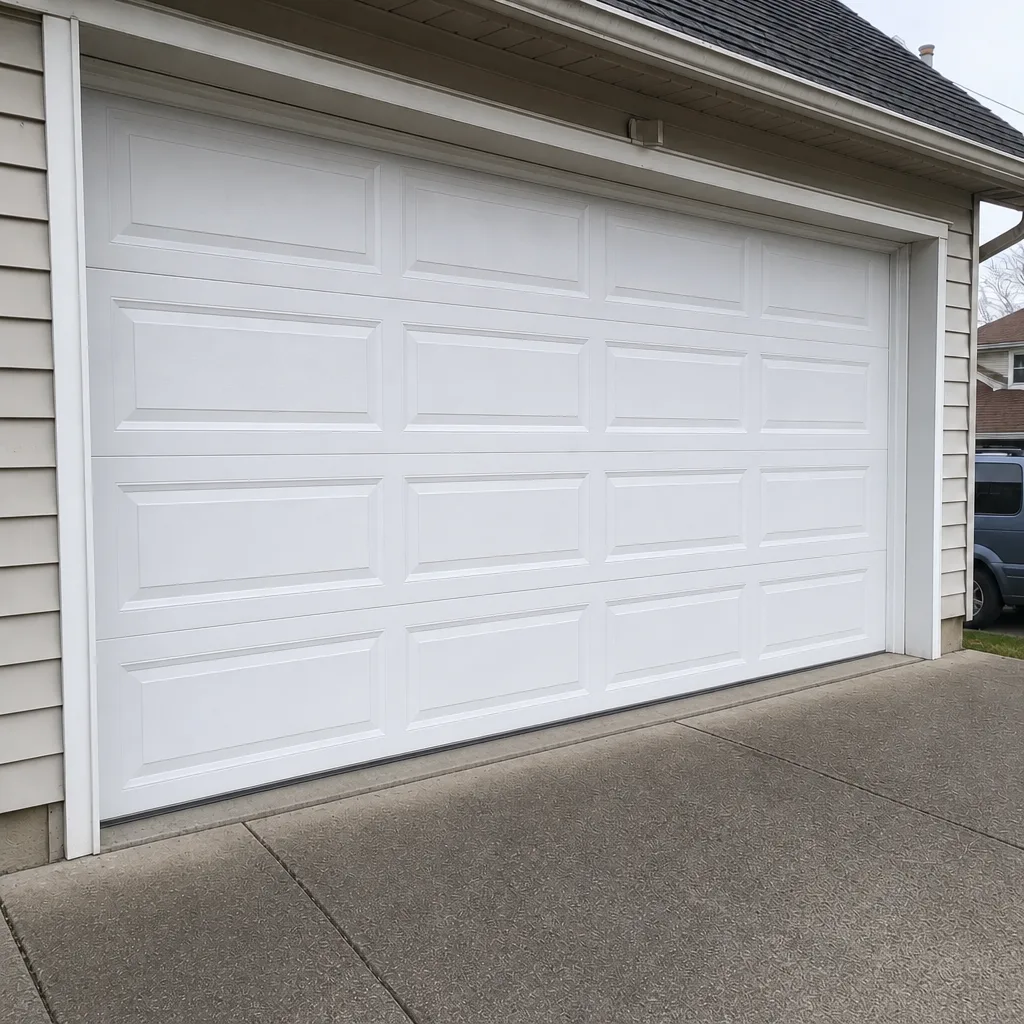
See the difference
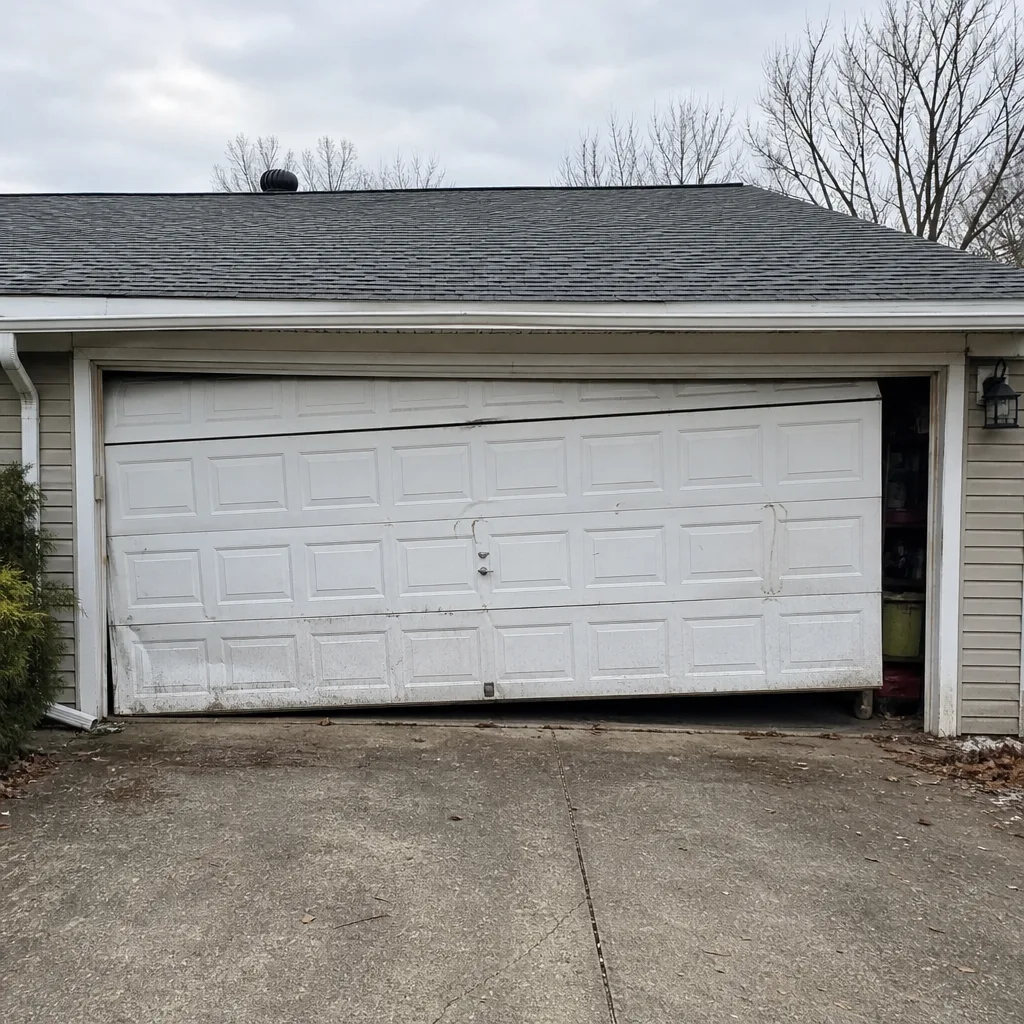 Before
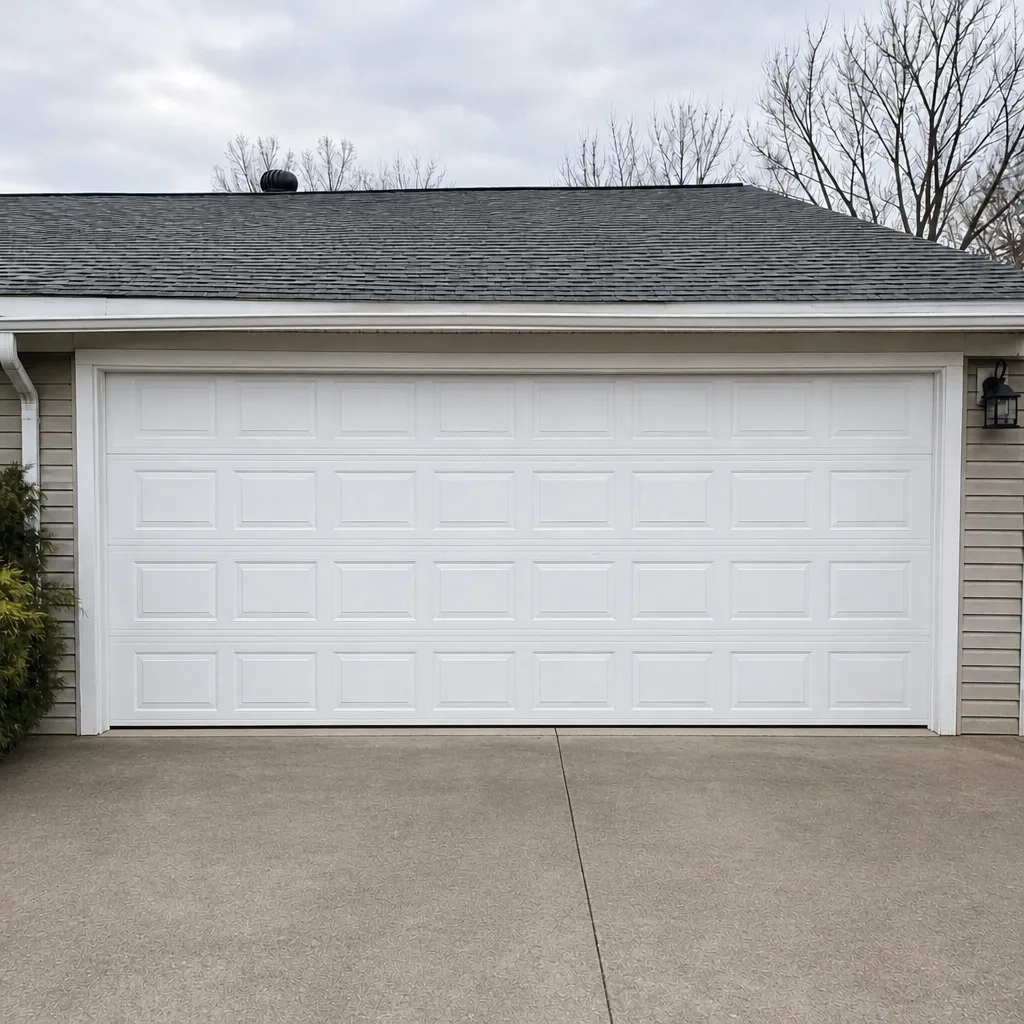 After
 Before
 After
 Before
 After
When to Call a Professional
Some garage door problems are genuinely fine to look at yourself. A stuck sensor, a remote that needs a battery, a track clogged with snow are small things. But several situations call for a trained technician: a door that won’t lift or won’t stay down after a cold snap; any loud bang from the springs; a door that’s out of balance or sags on one side; a door that has dropped partway and won’t sit flush; a bent track after someone backed into the door; and an opener that grinds, strains, or reverses for no reason. Each of these can put a door or a spring under load you can’t see, and forcing them usually makes the repair bigger. A free estimate tells you what the job is and what the price will be before anything gets touched. Garage Door Repair Hagerstown offers free estimates in Hagerstown. Call Garage Door Repair Hagerstown at (833) 866-7412 and we’ll tell you what’s wrong and what it costs to fix.
Frequently Asked Questions
Most standard-size insulated steel door replacements in Hagerstown come in at a few thousand dollars, with the exact price depending on size, panel style, insulation, and whether the rough opening needs adjusting. A custom size or an older home needing framing work raises the estimate. We quote in writing before any work is ordered, and that written estimate sets the final price. Call (833) 866-7412 for an exact quote. Estimates are free.
Usually yes, if you’re replacing a full door or changing the structural opening, and no if you’re only repairing springs, rollers, seals, or an opener. Because the rules can depend on exactly what changes, ask your city’s building department about your specific job before you order the door. An unpermitted structural replacement can complicate a future sale.
Installing a door yourself is possible in principle but rarely a good idea in this climate, and winding a torsion spring yourself is dangerous. A door needs correct spring sizing, proper balance, and correct track alignment to work and to seal against the weather. Getting any of that wrong risks the door coming down hard or failing early. Leave the springs to a specialist, and consider the installer for the full job.
Because freeze-thaw cycles load the whole door mechanism harder in cold weather, and cold steel holds a load differently. A spring that is already near the end of its cycle in fall is the one that fails first on a hard freeze. If the door has gone quiet and won’t open after a cold snap, assume a spring and call rather than force it.
Steel, and specifically insulated steel, is the best all-around choice for this climate. It doesn’t absorb moisture, so it handles freeze-thaw and summer humidity without warping. Wood and wood composites look great but need regular re-finishing in a climate that swings wet and cold. Aluminum works if the garage is insulated and attached, but it’s less forgiving in a cold, drafty detached garage.
Twice a year, once in fall before the freeze and once in spring after the thaw. Lubricate the rollers, hinges, and bearings, inspect the bottom seal and weatherstripping, and check the door’s balance. Fall is also when to have an aging spring assessed, since that’s when the cold will find it.
The Bottom Line
Garage doors in Hagerstown live in a harder environment than most guides account for. Freeze-thaw winters beat up bottom seals and springs, humid summers punish wood, and older homes around Washington County often have rough openings that don’t match stock sizes. The practical choices, steel insulated doors, cold-tolerant openers, seal maintenance twice a year, and a specialist for springs, all come back to that climate. Repair or replace is a real question here, and the honest answer depends on the door, not on a sales target. We’ll tell you which one actually makes sense, quote it in writing, and agree the price before any work starts.
Whether your door has snapped a spring, your opener has given up, or you’re ready to replace an aging wood door, we can help. Call (833) 866-7412 for a free estimate.
Written by the team at Garage Door Repair Hagerstown.