Last updated November 22, 2026
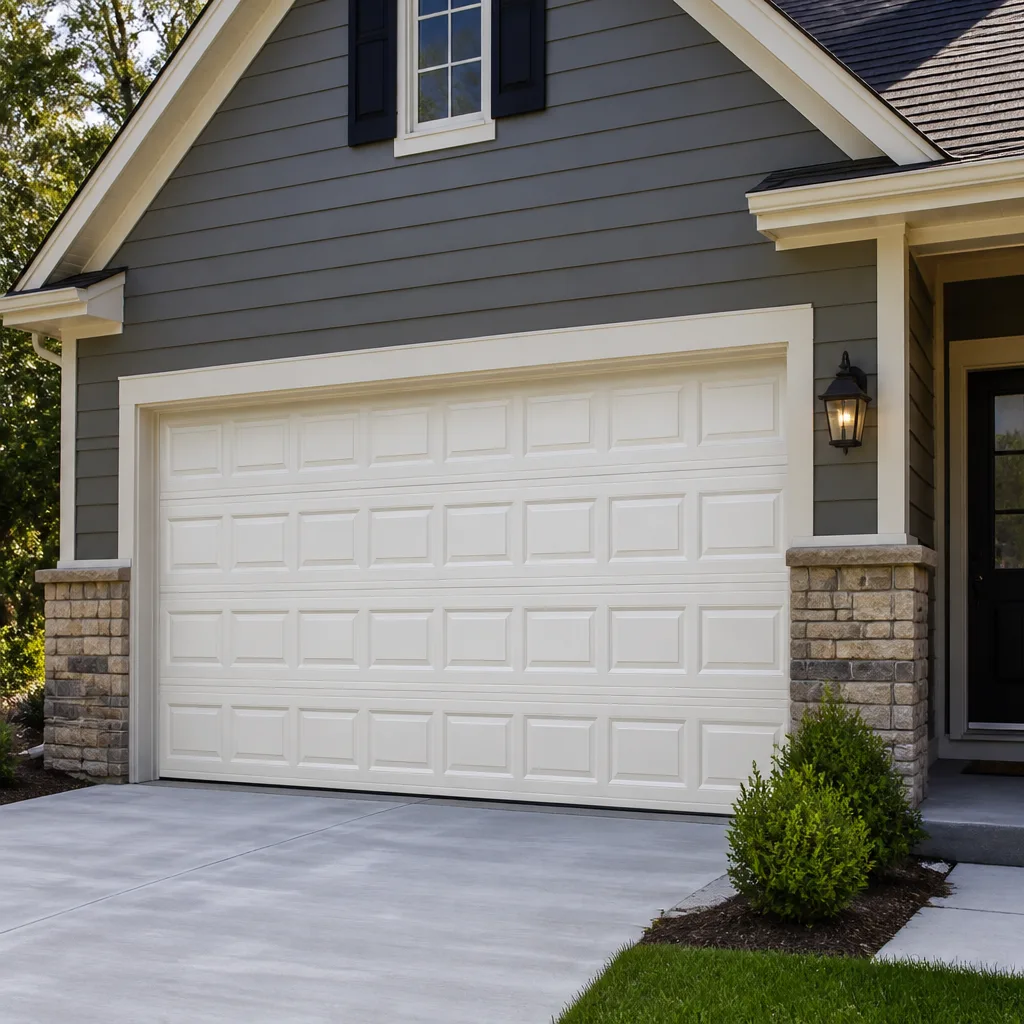 Raised-panel steel
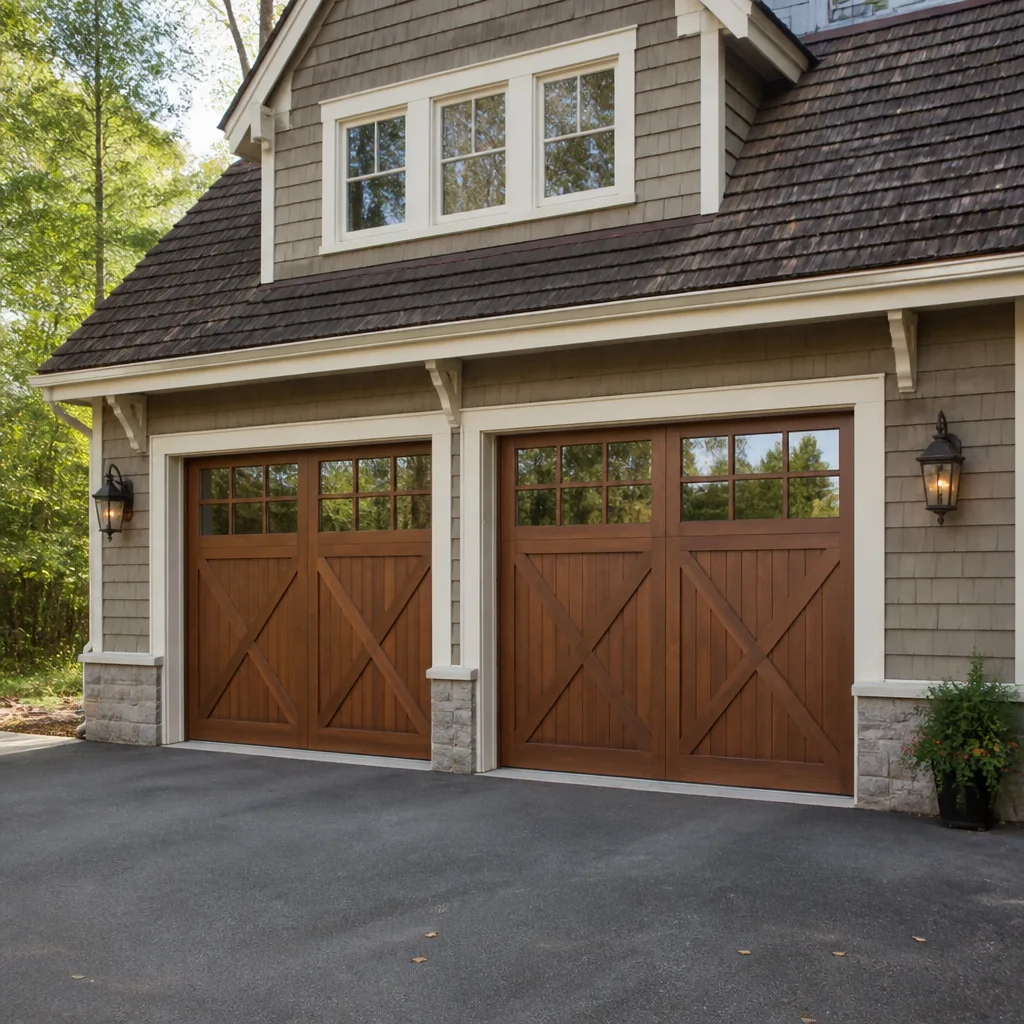 Carriage house
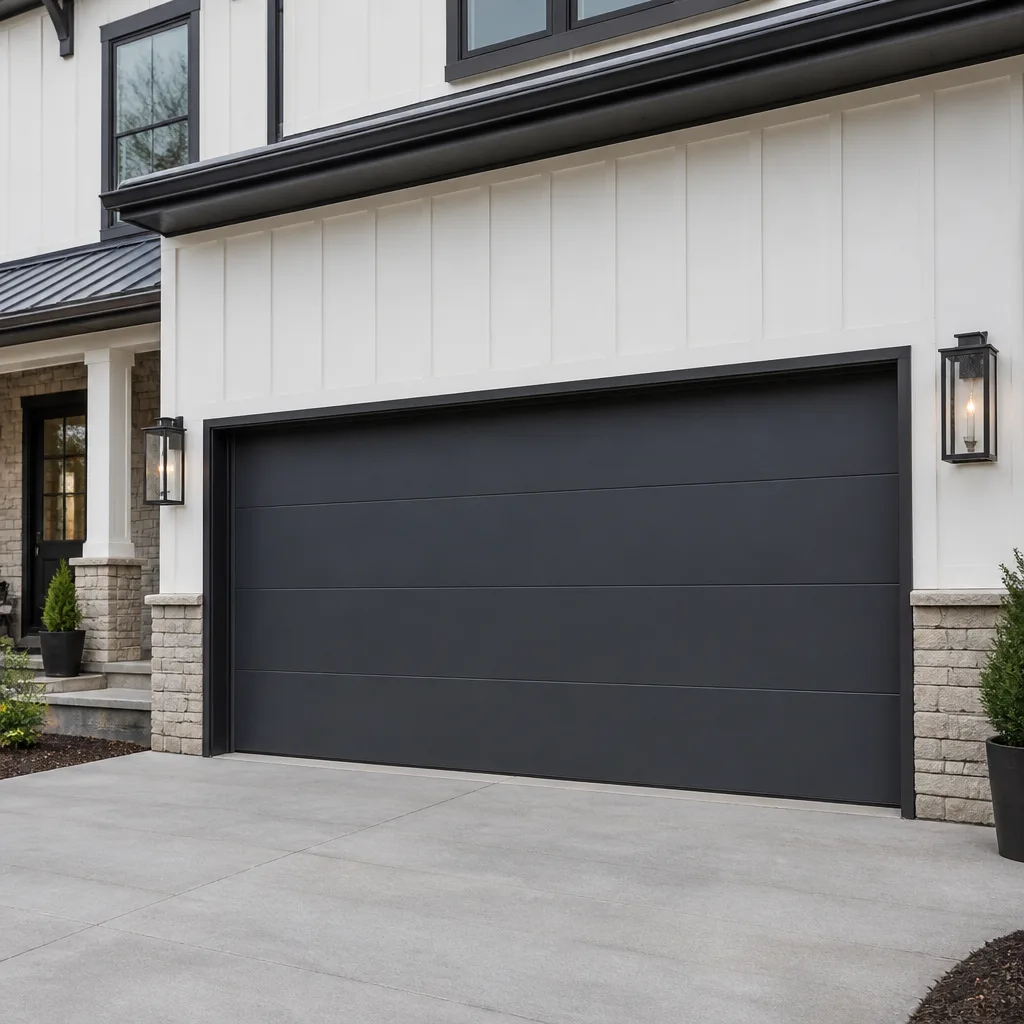 Modern flush
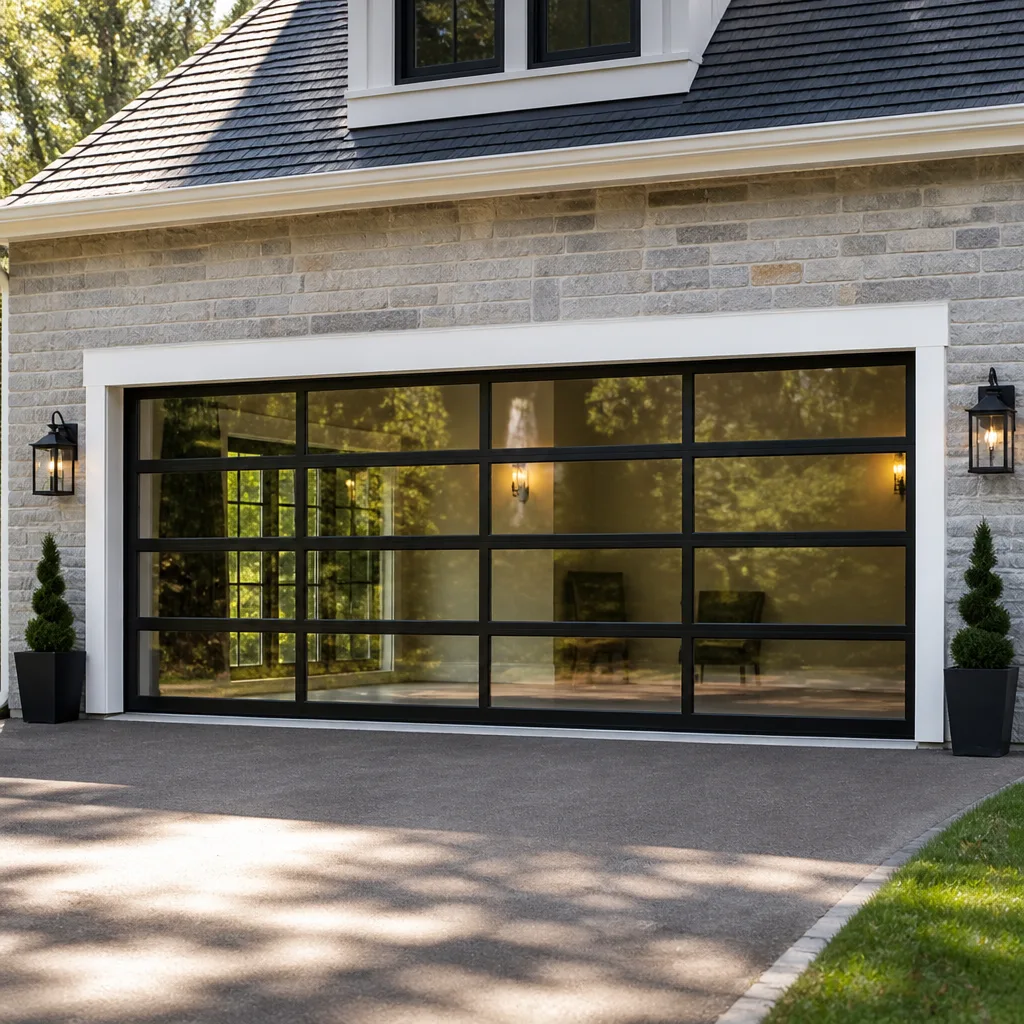 Full-view glass
 LiftMaster openers
 Chamberlain openers
Full 25-point door and opener safety check with every visit - springs, cables, rollers, tracks, and your LiftMaster or Chamberlain opener included
You get a price before we start. It does not change when the pro arrives.
Get your free estimateGarage Door Warning Signs: A Hagerstown Homeowner’s Reference Guide
The grinding noise that greets you when you raise your door is often a worn roller. The same grinding noise, timed a half-second later on the way down, is frequently a cable jumping its drum. Two sounds, two completely different problems, and a homeowner who treats them the same is looking at a roller-bushing job one day and a snapped high-tension cable the next. Paying attention to which direction the noise happens is step one. Knowing what it points to is the rest of the reference guide you’re reading. We’re Garage Door Repair Hagerstown, and below we’ve laid out every sound, movement quirk, and visual cue a Hagerstown garage door gives before it fails, with a severity grade for each.
Quick Answer
Garage door warning signs fall into three groups: sounds (grinding, squealing, popping, rattling), movement problems (slow travel, jerky motion, stopping mid-cycle, uneven gap at the floor), and visual cues (frayed or slack cables, rust streaks on springs, flat-spotted rollers). Symptoms that stay in the “cosmetic or slow-wear” tier can typically wait for a scheduled visit, but anything involving a slack or snapped cable, a spring with a visible gap, or a door that drops unevenly means keep the door closed and call for same-day help.
Styles & brands we work with
- Raised-panel steel
- Carriage house
- Modern flush
- Full-view glass
- LiftMaster openers
- Chamberlain openers
Table of Contents
- What each garage door noise is telling you
- Reading the way your door moves
- Visual warning signs: cables, springs, and rollers
- Severity triage: what’s safe to watch and what isn’t
- Hagerstown-specific causes: road salt, humidity, and old hardware
- Brand-specific quirks: Genie, Clopay, Amarr, and Wayne Dalton
- The seasonal self-check routine
What Each Garage Door Noise Is Telling You
Sounds are the earliest and cheapest warning sign to catch, because they almost always start quiet and build. We’ve found that matching the sound to the component cuts diagnostic time in half. Here’s the breakdown we use.
Grinding on the way up vs. grinding on the way down
Grinding during the upward travel is usually a roller or hinge that’s lost lubrication or flat-spotted. Grinding on the way down, especially if it appears in the last few feet before the door closes, is frequently the cable riding wrong on its drum or a torsion tube binding. That second one is a safety issue, not a maintenance item.
Squealing and screeching
High-pitched squealing at the hinges and rollers is the easiest to fix and the easiest to ignore. It’s metal-on-metal wear in the hinge plates. A little noise now means a seized roller and a jumpy door within a season.
Popping or snapping
A single sharp pop, especially from one side of the door near the top of the track, often signals a torsion spring just lost tension or broke. A repeated pop as the door moves is usually a loose hinge that’s worked its way free of the panel. One is a call-now situation. The other is on the list for your next service visit.
Rattling and banging
Loose bolts on the track brackets, loose opener chain, or a door panel separating from its hinge all produce a rattle. Rattling under a chain-drive opener is often just the chain tension. Rattling along the side of the door usually means the hinge bolts need tightening before the panel cracks.
The order in which you hear a sound matters as much as the sound itself. A door that grinds only when it’s cold usually means components are contracting and binding in the track. For a full understanding of how the repair side breaks down by symptom, our guide to garage door repair covers the component-specific fixes.
Reading the Way Your Door Moves
Movement problems surface before the noise gets loud, and they tell you which system is stressed. Watch the door from inside the garage, in daylight. Use these categories.
- Slow travel. The door opens at half its usual speed or drags at the top. Often a worn torsion spring losing tension or a worn opener gear. Not urgent unless the opener motor is audibly straining.
- Jerky, uneven motion. The door pauses, stutters, or bangs its way up. Rollers out of the track, a bent track section, or unequal spring tension are the usual causes. This one moves up to the call-within-24-hours tier.
- Door stops mid-cycle and reverses. The safety sensors or opener force setting is out of spec. Not dangerous by itself, but the door is now unreliable and could stop in traffic.
- Door stops mid-cycle and doesn’t reverse on its own. The opener is probably binding against a factor in the door itself. Stop running it and get a technician out.
- Uneven gap at the floor. A visible wedge of daylight, brighter on one side, means one spring or one cable is working harder than the other. This is a two-spring system balancing issue and should be looked at before it accelerates.
- Door drops or swings open without a command. Any free fall or uncommanded movement is a stop-everything signal. Keep the door closed and call for emergency service.
Those first three items get written up in a routine service call. The last three get us on the phone to the customer with a plan for keeping the door stationary until we arrive. That’s part of why we treat every garage door repair call separately, based on what the door itself is doing.
Visual Warning Signs: Cables, Springs, and Rollers
A flashlight is enough to check most of this. Do it with the door closed and stationery, and don’t reach up into the spring assembly. The high-tension springs at the top of the door are the most dangerous component in a garage, and every one of the visual checks below is observation only. No adjustment, no winding, no testing even a single turn.
Cable slack and fraying
- Both cables should have even tension, roughly. A slack cable on one side only is a red flag.
- Fraying visible as a fuzzy outline on the cable is a replace-now signal, because a snapped cable can whip.
- Cables that have jumped off their drum usually appear “looped” above the bottom bracket.
Rust patterns on springs
Torsion springs should look uniformly painted or oily. Rust spots along the coil, especially in a concentrated band, are where the metal has started to crack and the coil is losing strength. A spring with a rust band and a visible gap between coils is on the clock. This is where our dedicated garage door spring repair work starts, because a compromised spring almost always means its partner is close behind.
Roller wear
- Steel rollers flatten where they sit against the track. A worn roller has a visible flat spot at “rest” position.
- Nylon rollers crack rather than flatten, so look for fine surface cracks on the wheel edge.
- Wobbly roller shafts mean the roller stem has worn the hinge hole out of round.
Hinge and bracket telltales
Street-level salt spray and humidity cause a thin orange stain at the hinge. If the stain has turned into a crust, the hinge is probably already binding. A brown or black streak running down from the bottom bracket onto the door jamb is what we look at first when we arrive on a Hagerstown job.
Severity Triage: What’s Safe to Watch and What Isn’t
Every warning sign on a garage door falls into one of three categories. The point of this guide is to keep homeowners from guessing.
Tier 1: Schedule within the week
- Squealing, squeaking, or mild grinding from hinges or rollers.
- Faded or worn-away lubrication on the tracks, hinges, or torsion tube.
- Small flat spots on steel rollers.
- Loose bolts on the track brackets.
- A slightly uneven gap at the floor (under a quarter-inch) that hasn’t worsened.
Tier 2: Schedule within 24 hours
- A single sharp pop from the top of the door, and the door won’t stay closed.
- The door binds, jerks, or stutters during travel.
- A visible slack cable or a cable that has jumped the drum.
- A spring with a clear gap between coils or visible rust-through.
- An opener that reverses on its own repeatedly.
Tier 3: Stop using the door and call now
- A snapped or visibly broken spring or cable.
- The door hangs unevenly from one corner, or drops when the opener releases.
- The door will not close fully under its own power.
- A popping, cracking, or groaning that comes from inside the torsion tube.
- The door falls freely when a person stands near it.
Anything in Tier 3 calls for emergency garage door service. We operate same-day and emergency calls for exactly this reason.
Hagerstown-Specific Causes: Road Salt, Humidity, and Old Hardware
Hagerstown sits where Route 40 and I-70 intersect. That matters for a garage door in a way most warning-sign guides don’t explain. If your garage faces a street near those corridors, the winter salt spray that lands on the door and brackets accelerates corrosion at every contact point the plow trucks don’t reach. The bottom bracket is where it starts, because that’s the lowest point and gets splashed continuously.
Our region also gets the freeze-thaw cycle that switches water into ice in the gaps of the tracks and hinges. Water pools in a warm afternoon, freezes at night, and opens a few thousandths of an inch of clearance in the metal each time. A door in Hagerstown may develop roller binding and a slightly warped track even with perfect maintenance. It’s one of the reasons our technicians have up to 15 years of experience working with local conditions, and why a spring that failed after a cold snap often looks fine a day earlier.
Humidity in Western Maryland during the summer months is the second environmental factor. It rusts the torsion tube and stresses the track alignment more than a dry climate would. Doors on the City Park side, near the older homes around South Prospect Street and the downtown neighborhoods, often show rust on the original hardware from decades before. Doors toward Fountainhead or the newer subdivisions usually have more modern nylon rollers that crack instead of rust.
Wind is a smaller factor here, but it exists. A door that “shudders” during a gust is showing a loose panel-hinge connection, not a wind problem. That shudder, repeated over a few years, causes the panel gaps to widen until the door misaligns against the track.
Brand-Specific Quirks: Genie, Clopay, Amarr, and Wayne Dalton
We service eight of the most widely installed door and opener brands: LiftMaster, Chamberlain, Genie, Clopay, Amarr, Wayne Dalton, Craftsman, and Raynor. Each one has its own characteristic warning signs, and knowing yours saves time on a call.
Genie openers
Genie opener warning signs usually show up as a light that won’t stop blinking or a wireless keypad that’s stopped responding. That combination almost always points to a safety sensor misalignment first, not a board failure.
Clopay doors
Clopay sectional doors are prone to hinge separation along the middle stiles. A Clopay door that rattles on close is often showing the first stage of stile separation, not a loose bolt.
Amarr doors
Amarr insulated doors have a characteristic sound at the bottom seal when it starts to wear. If the door drags at the bottom before the wheels hit the floor, the seal is bulging rather than tracking flat.
Wayne Dalton doors
Wayne Dalton torsion systems are relatively common on older installs around Hagerstown. A Wayne Dalton door showing a small dark rust spot on the spring should be treated as Tier 2 rather than Tier 1, because the spring coils on this line tend to crack in place rather than unwind cleanly.
If your door or opener is one of these brands, mention it when you call. If we’re not sure which door you have, our team can identify it from a photo or from the label inside the opener housing. The failure modes across all of them are on our garage door repair Hagerstown page, and the full breakdown of the opener side is in garage door opener repair.
The Seasonal Self-Check Routine
A short visual and listening inspection twice a year will surface most Tier 1 symptoms before they become Tier 2 or Tier 3. This is the routine we recommend.
- With the door closed, look at both springs. Check for a visible gap, rust-through, or oil pooling under the spring. If you see any of them, call us and keep the door shut.
- Inspect both cables at the bottom corners. Any fraying, slack, or a looped cable above the bracket is Tier 2.
- Run the door and listen from inside the garage. Note which component squealed, ground, or popped, and on which stroke (up or down).
- Check the roller condition at each hinge. Look for flat spots, cracks, or wobble at the shaft.
- Look at the gap under the door on a sunny day. A uniform line of light is fine. A wedge is not.
- Test the safety reverse by placing a small board in the door’s path. The door should reverse on contact. If it doesn’t, stop using the door and call us.
- Lubricate the hinges, rollers, and track with a garage-door-rated spray. Do not lubricate the spring itself. Do not adjust any spring part. That’s a trained-technician job.
Common Mistakes to Avoid
- Treating a single pop as “nothing.” A single pop from the torsion assembly is often a spring that has already lost tension. Continuing to run the door on a weakened spring usually snaps the partner within a few weeks.
- Winding or adjusting the spring yourself. The high-tension springs at the top of the door hold enough energy to cause serious injury when they release. They need a trained technician with the right winding bars and the door secured.
- Spraying WD-40 into the track. A liquid lubricant attracts dust, which then grinds into the rollers. Use a garage-door-rated lubricant, not a penetrating oil.
- Ignoring that odd grinding only in cold weather. Binding when cold is often the first sign of a track that has shifted. Left alone, the door starts to bind in warm weather too.
- Assuming your Hagerstown door is “just old.” Age explains some wear, but there is no such thing as a door with a warning sign that’s simply accepted. Rust on a bottom bracket near Route 40 is a maintenance problem, not an age problem.
- Calling a general handyman for a spring issue. Many handymen and general contractors won’t touch high-tension springs. If your first call is a generalist, you’ll usually end up calling a garage door specialist anyway, and the door has been sitting in a bind the whole time.
- Running the door after a cable snaps. A slack cable can whip or catch a body part. The door should stay put until a technician looks at it.
See the difference
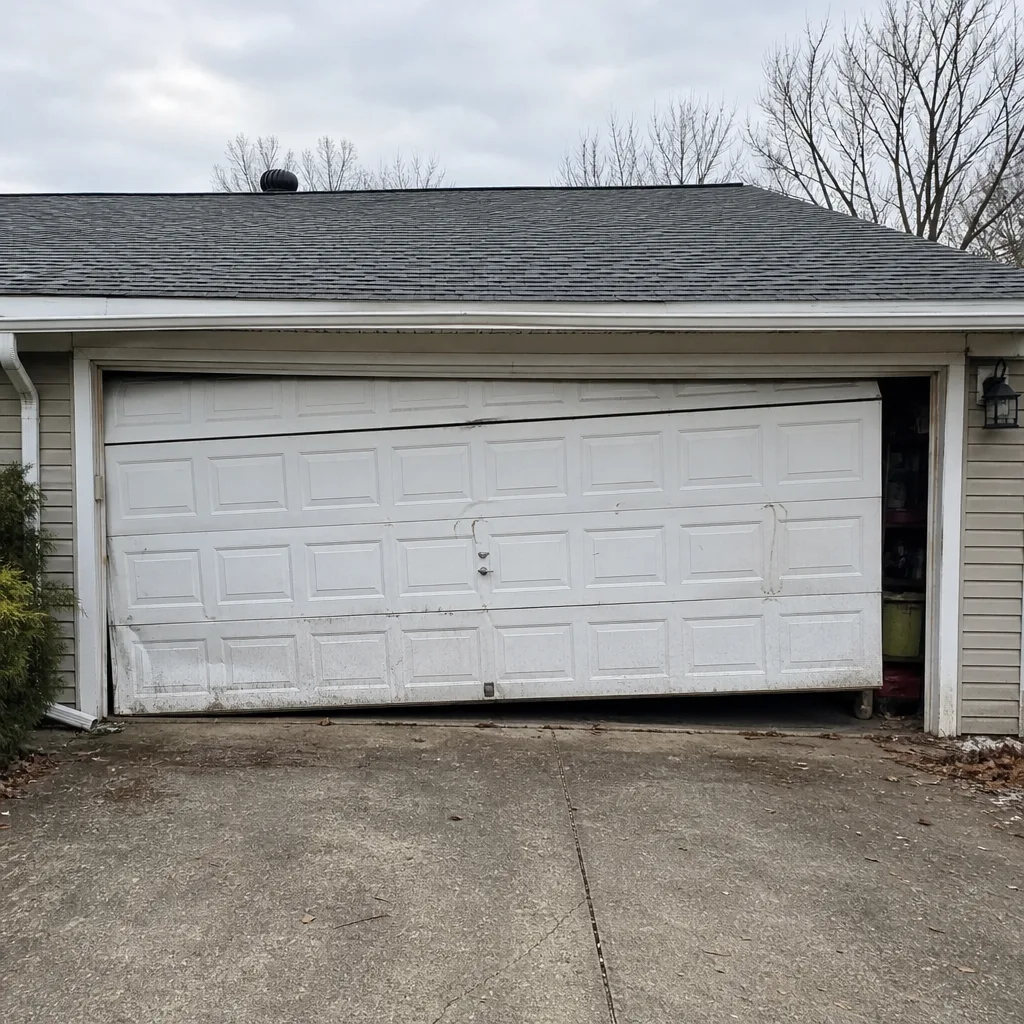 Before
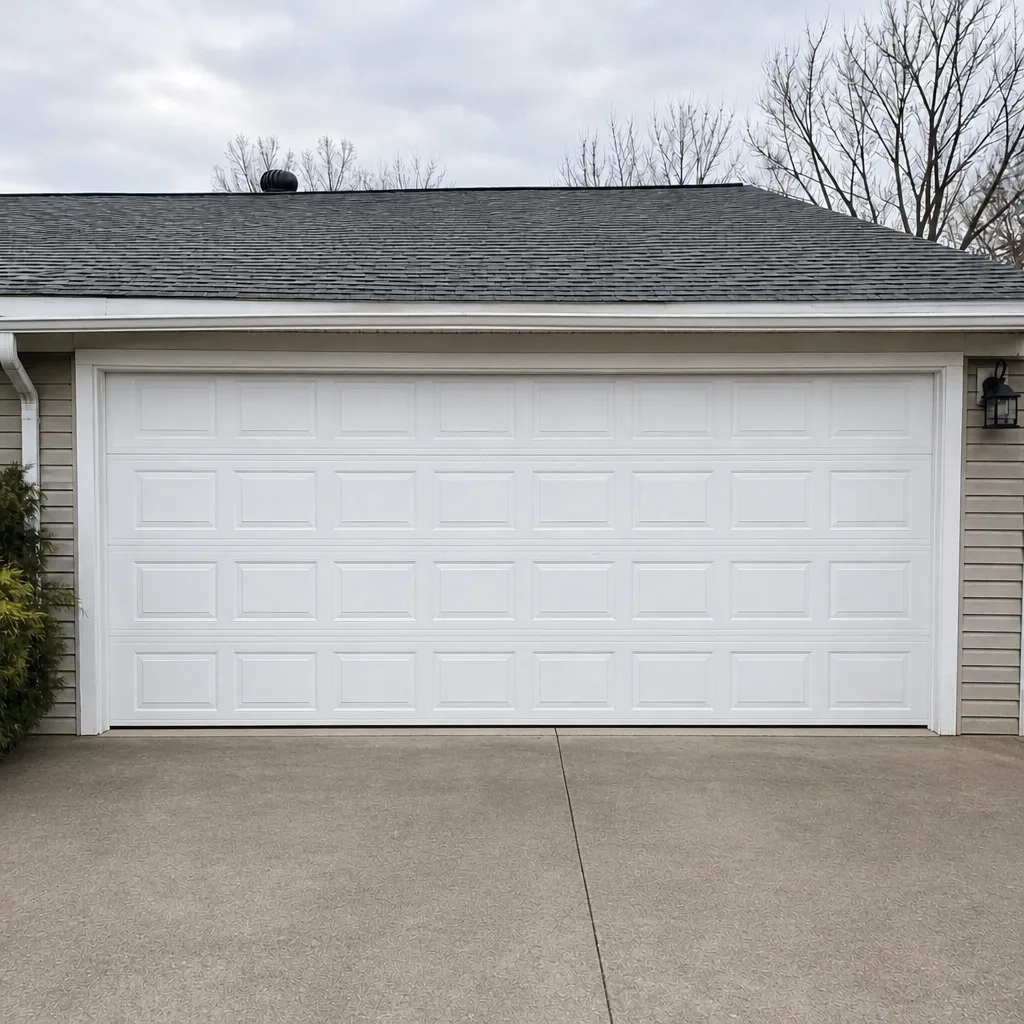 After
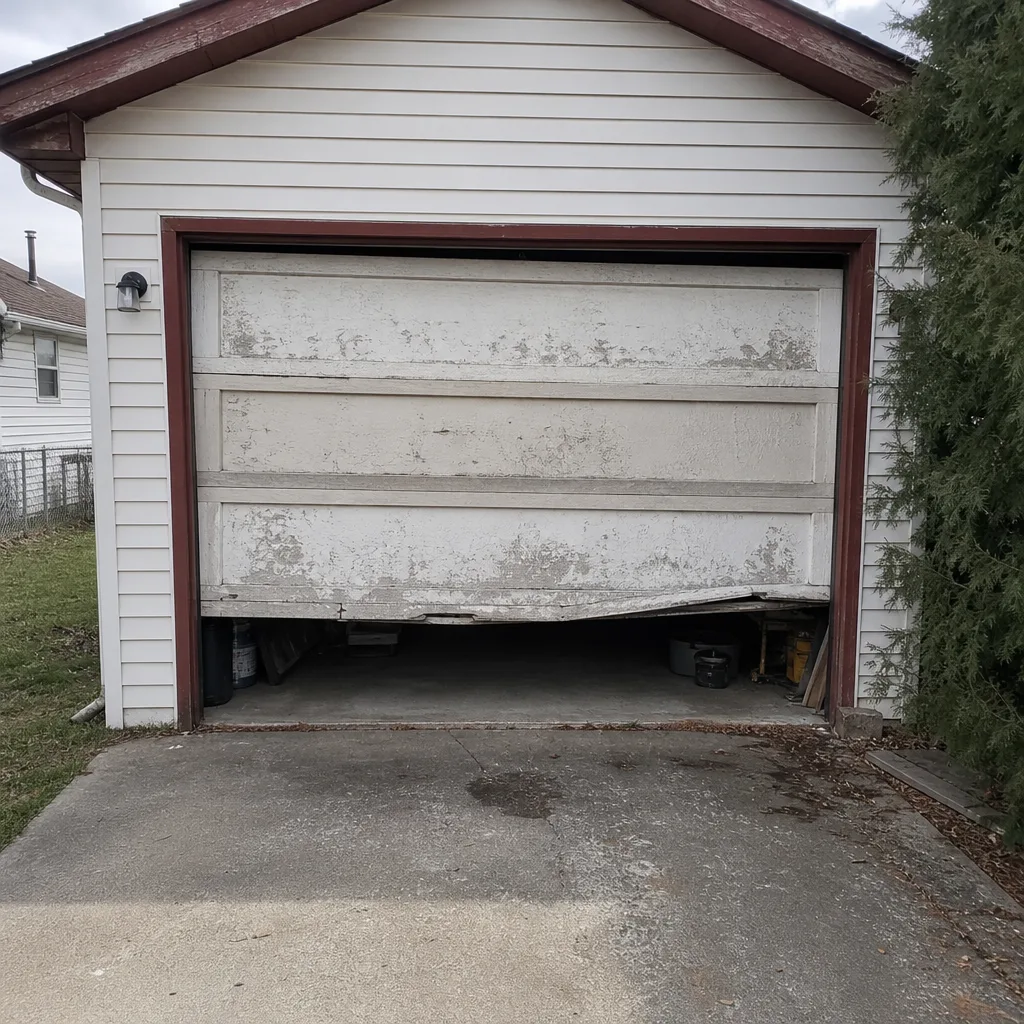 Before
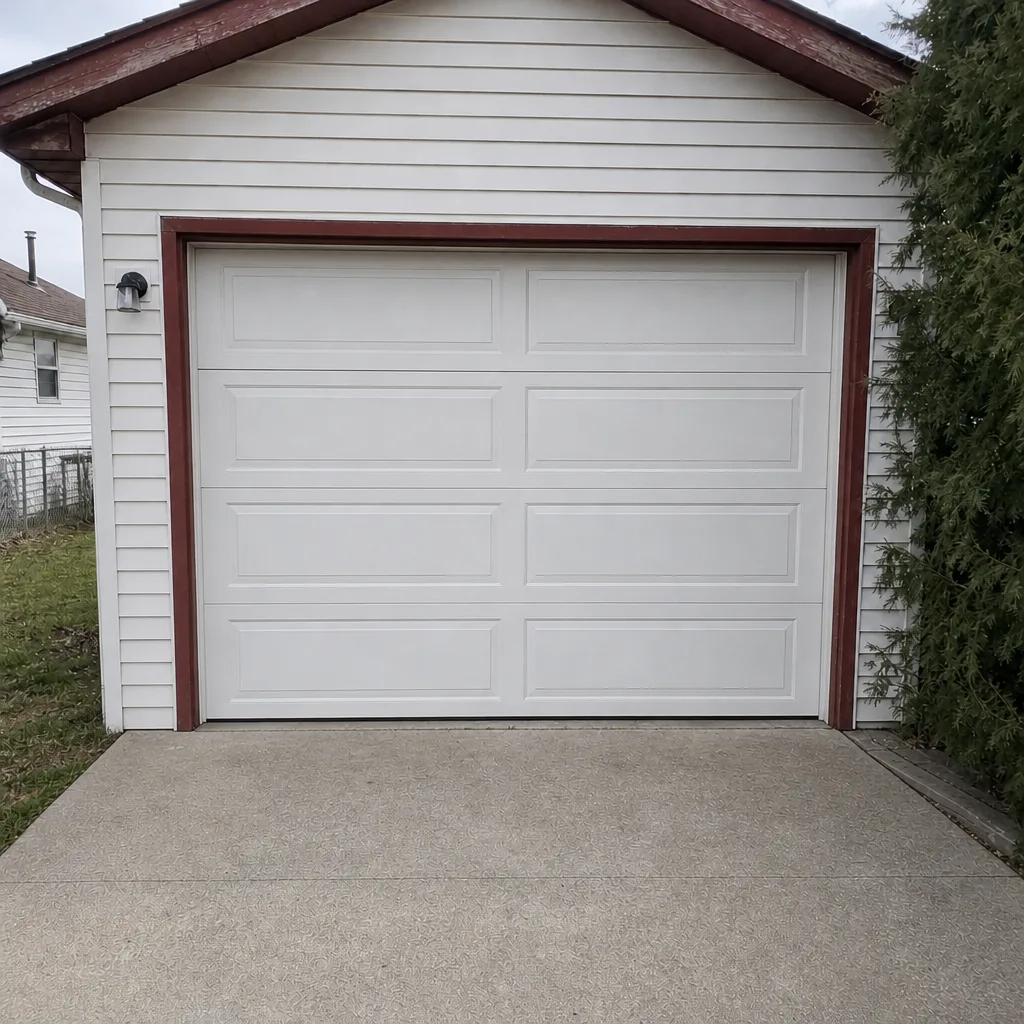 After
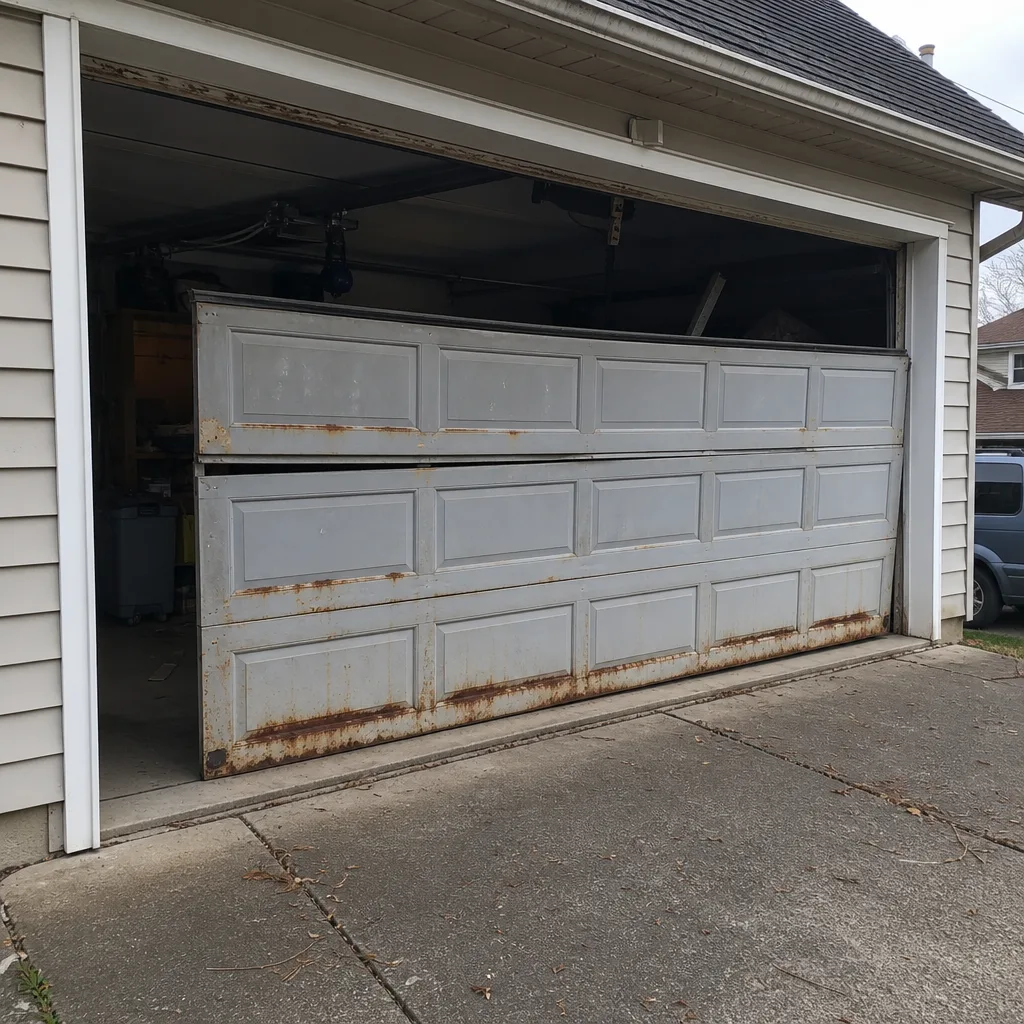 Before
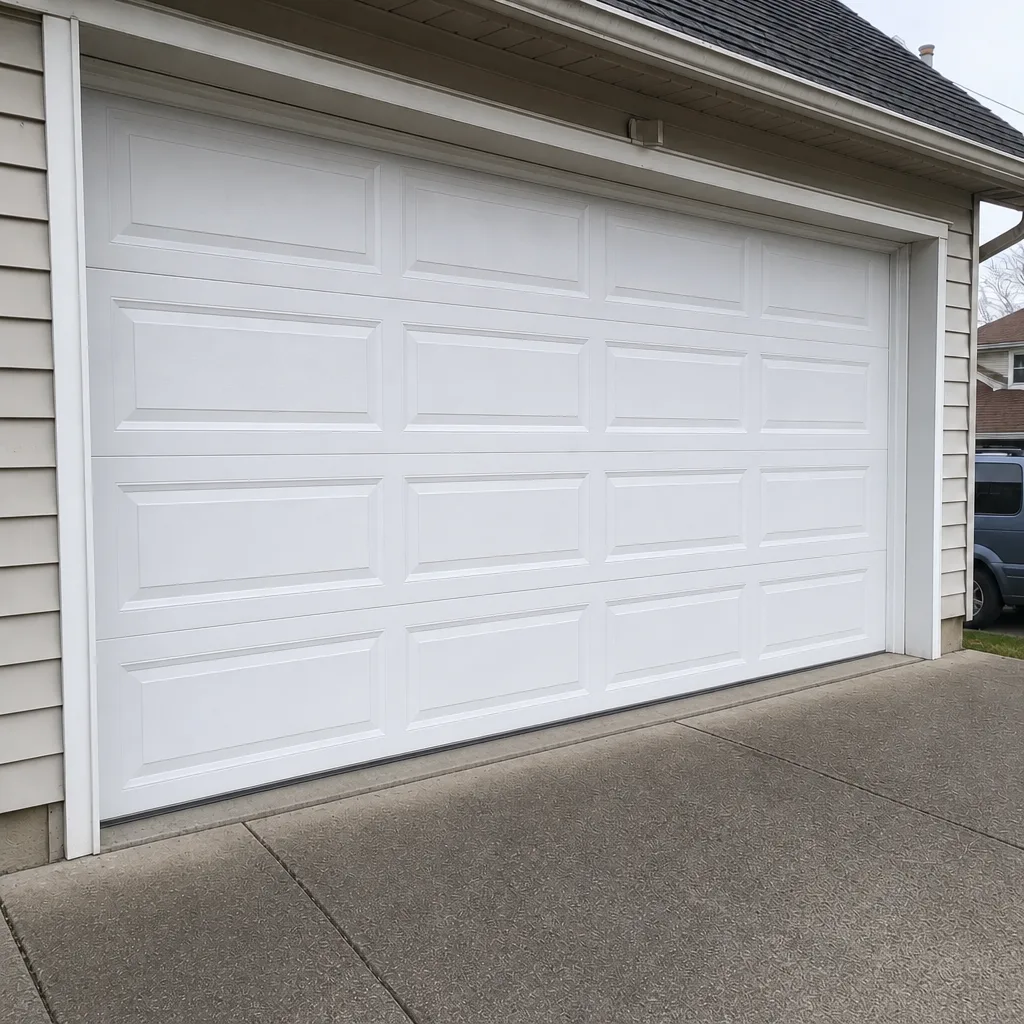 After
When to Call a Professional
Call a professional if any Tier 2 or Tier 3 symptom shows up, if a spring has a visible gap or rust band, if a cable is slack, if the door hangs unevenly or drops, or if any single pop has left the door refusing to close. Those are the situations where waiting becomes a bigger repair. Garage Door Repair Hagerstown offers free estimates in Hagerstown, and we can walk you through whether a symptom is a same-day call or one that can wait. Call (833) 866-7412 and we’ll tell you which tier you’re in.
Frequently Asked Questions
The most common single warning sign we see is a soft grinding or squealing from the hinges and rollers during the first few feet of travel. It’s the earliest wear indicator on the door, and it’s almost always a routine lubrication or roller replacement issue when caught at that stage.
Yes, sometimes. A spring with a visible rust band, a gap between coils, or any pooling oil underneath is showing that it’s compromised. Any of those three signs means stop using the door and call us, because the spring holds enough tension to cause serious injury if it releases unexpectedly.
Listen to the direction of the noise. Grinding on the up-travel is usually a roller. Grinding on the down-travel, especially near the end of the cycle, or a visible looping cable above the bottom bracket, points to the cable and drum. Cables are the more urgent of the two.
No. Jerky travel can come from a bent track, a seized roller, a failing opener gear, or unequal spring tension. The spring is the most dangerous cause and the hardest to check safely yourself, so a jerky door is worth a call even if it turns out to be a track issue.
Salt spray from the plow trucks combined with the freeze-thaw cycle accelerates corrosion on the bottom bracket and hinges, and the metal binding at low temperatures amplifies the noise. A door that squeals only when cold is often a sign that hinge and bracket hardware is already tired.
Usually, yes. We work on LiftMaster, Chamberlain, Genie, Clopay, Amarr, Wayne Dalton, Craftsman, and Raynor, and can often identify the door from a photo or the label inside the opener housing. Mention what you can see when you call (833) 866-7412 and we’ll sort out the brand before we arrive.
A single worn roller replacement is typically the smallest job, while a cable or spring issue is a more involved repair. The exact number depends on the door, the brand, and the parts involved, so the price you get is quoted and agreed before any work starts. Call (833) 866-7412 for an exact quote.
No, not on a quoted job. We inspect, quote, and agree on the number before we start. If something new turns up mid-job, we stop and talk it through before proceeding. That’s the rule for every repair we touch, including spring and cable jobs.
The Bottom Line
Garage doors give you warning before they fail, and every warning falls into a sound, movement, or visual category with a predictable cause. The three-tier severity scale is the practical tool: Tier 1 is schedule-it-in, Tier 2 is call-today, and Tier 3 is stop-the-door-and-call-now. In Hagerstown, add the salt, freeze-thaw, and humidity factors that push wear faster than a dry-climate guide would suggest. Brand matters too: Genie, Clopay, Amarr, and Wayne Dalton each have their own warning patterns.
If you’re not sure which tier you’re looking at, call Garage Door Repair Hagerstown at (833) 866-7412 for a free estimate. We handle spring repair, opener repair, and full installations with the same team and the same written estimate before work starts.
Written by the team at Garage Door Repair Hagerstown.